Prototype design
A rain gauge that keeps its own log
Read it like any good gauge. Or scan the code on it, take a photo, and the rain goes into your log for that field.
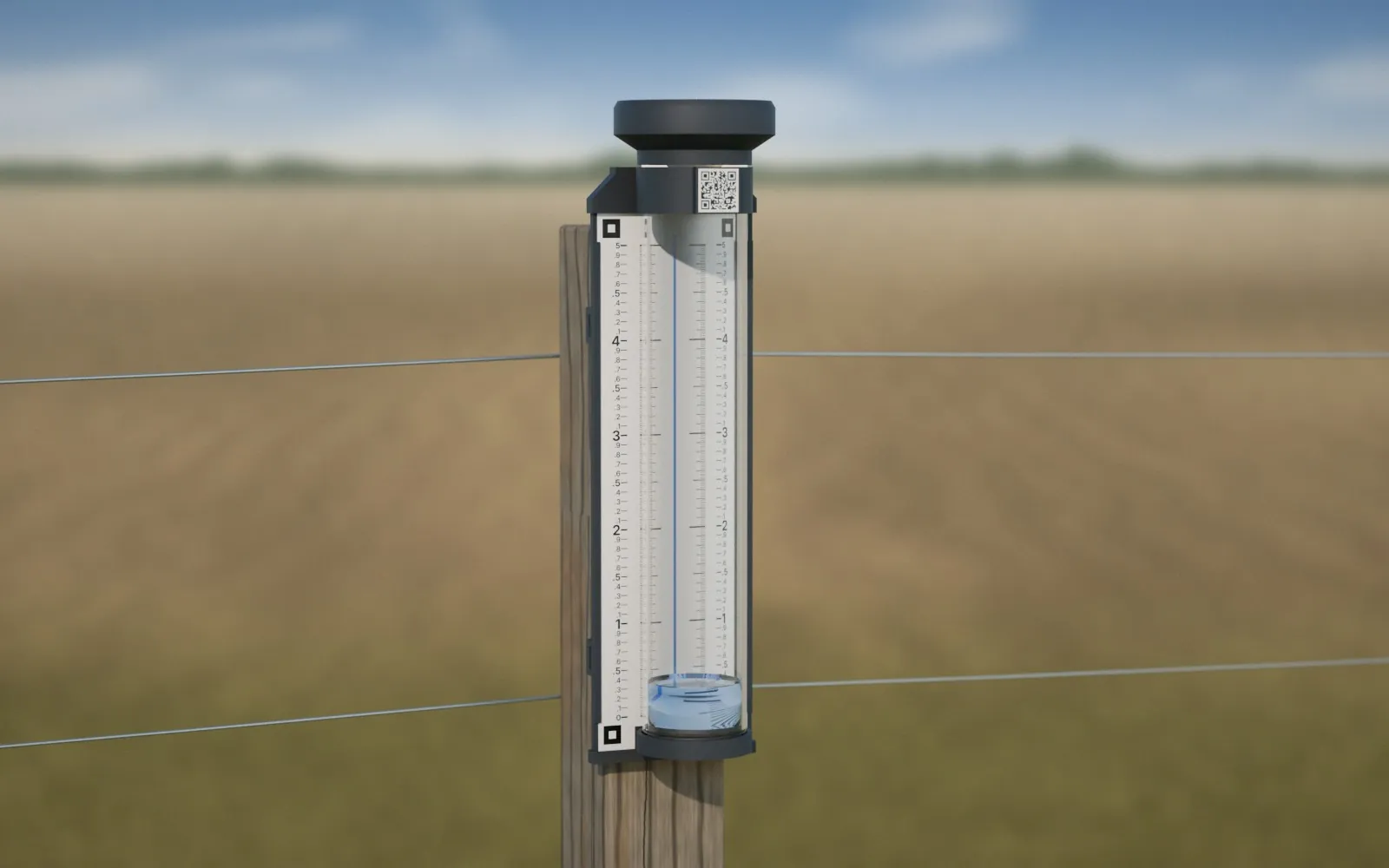
Where it stands: a prototype on my bench in Chetek. I’m aiming to have the first ones ready before planting 2027.
What it is

This is the prototype I’ve designed. The printed parts are charcoal.
- A clear tube on the outside. It’s a store-bought clear tube, so you see the water without opening anything.
- A white scale behind it. A printed back holds the white scale. You read it through the clear tube, with big numbers on both sides.
- A funnel on top, the code on the collar. The top funnel is printed. The QR code sits on the collar just under it.
- Lift it out to empty it. The tube lifts straight up out of its printed holder. Dump it and set it back in.
Wood post or T-post
It screws onto a wood post. On a steel T-post, two hose clamps hold it. Put it on the fence line you already drive past.
Like any rain gauge, it reads best out in the open, away from trees and buildings.

How it would work
It works like any good rain gauge. Walk out after a rain, look at the scale through the tube, read it. The difference is what happens next.
-
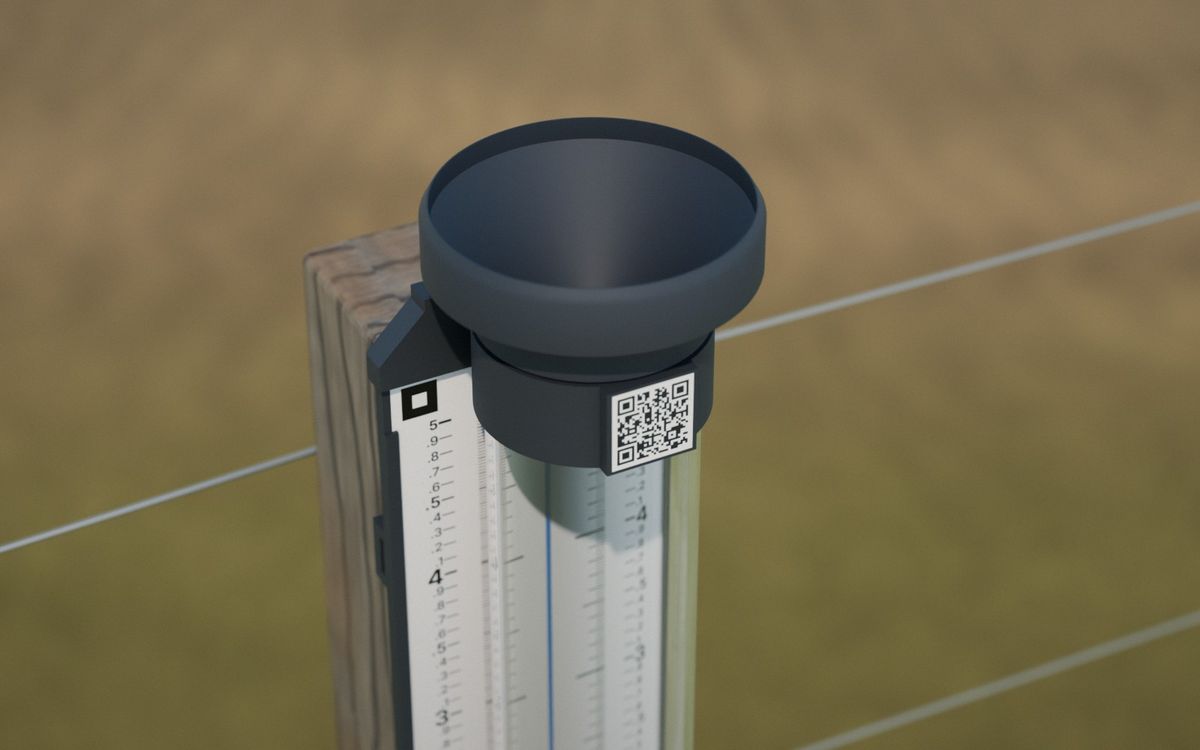
Prototype design, 3D render. The code on the collar. Scan the code
Each gauge has its own code on the collar, so your phone knows which field it’s standing in. No app to install; it opens in the browser.
-
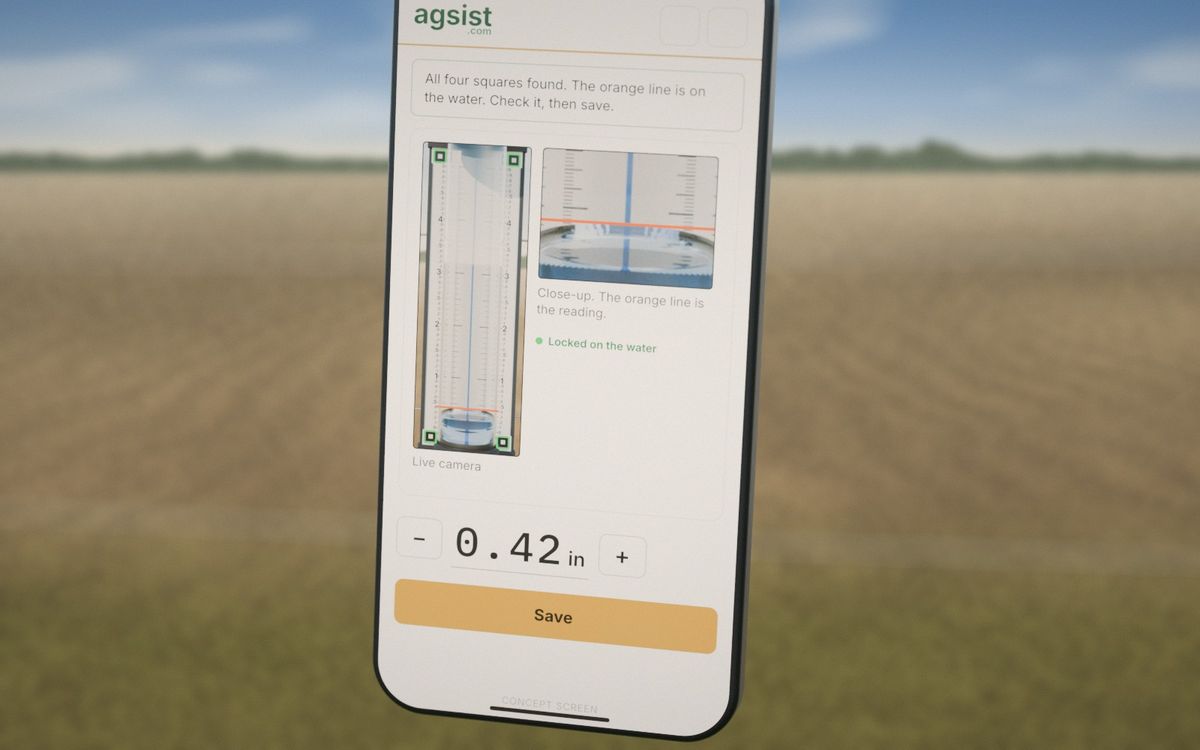
Concept screen: how the phone reading will look. The reader is being adapted to this design. Take a photo of the scale
Take a photo through the clear tube. The phone shows you the number, like 0.42 in. If it looks off, nudge it up or down before you save.
-
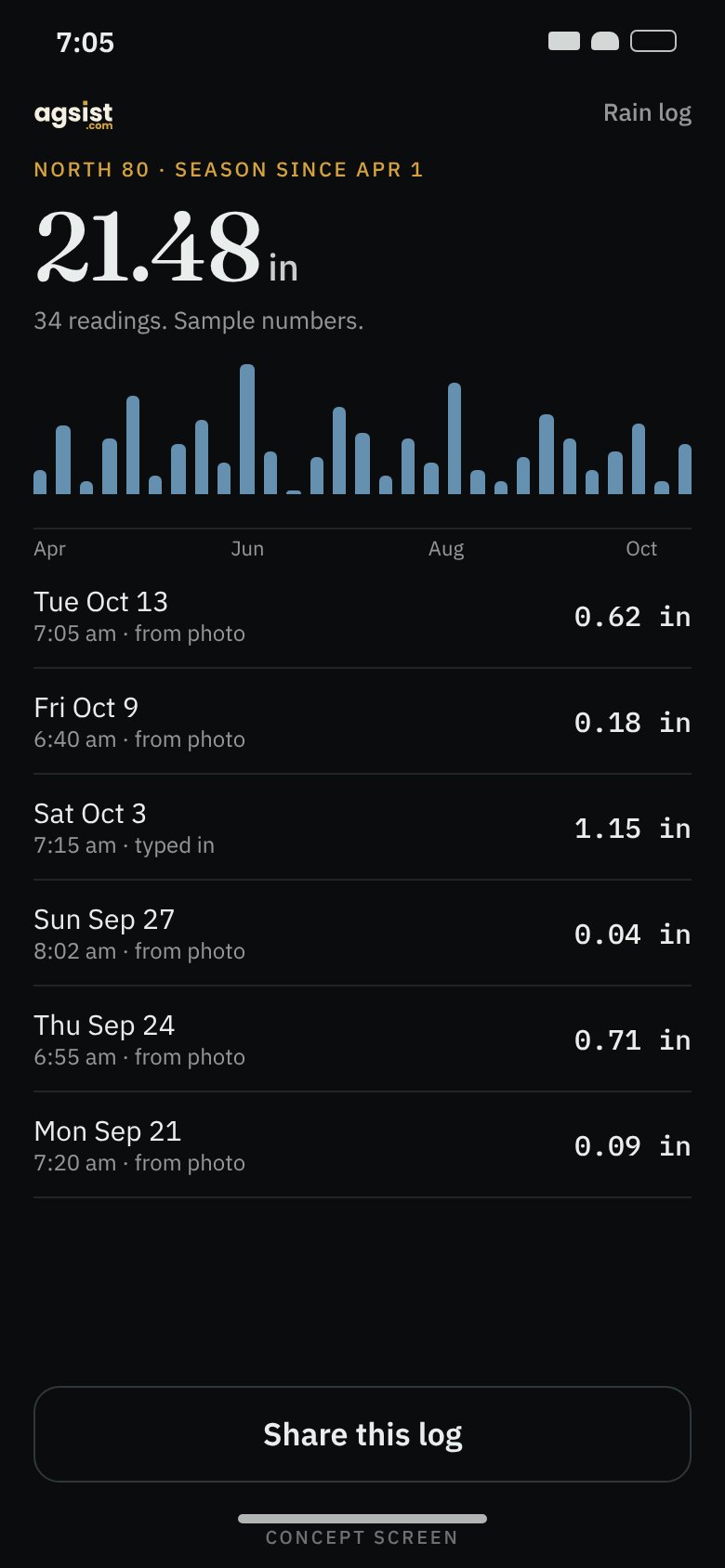
Concept screen: your rain log for one field, with the season total. It lands in your rain log
Every reading is kept by field, with the date and time. Your season total is always up to date.
-
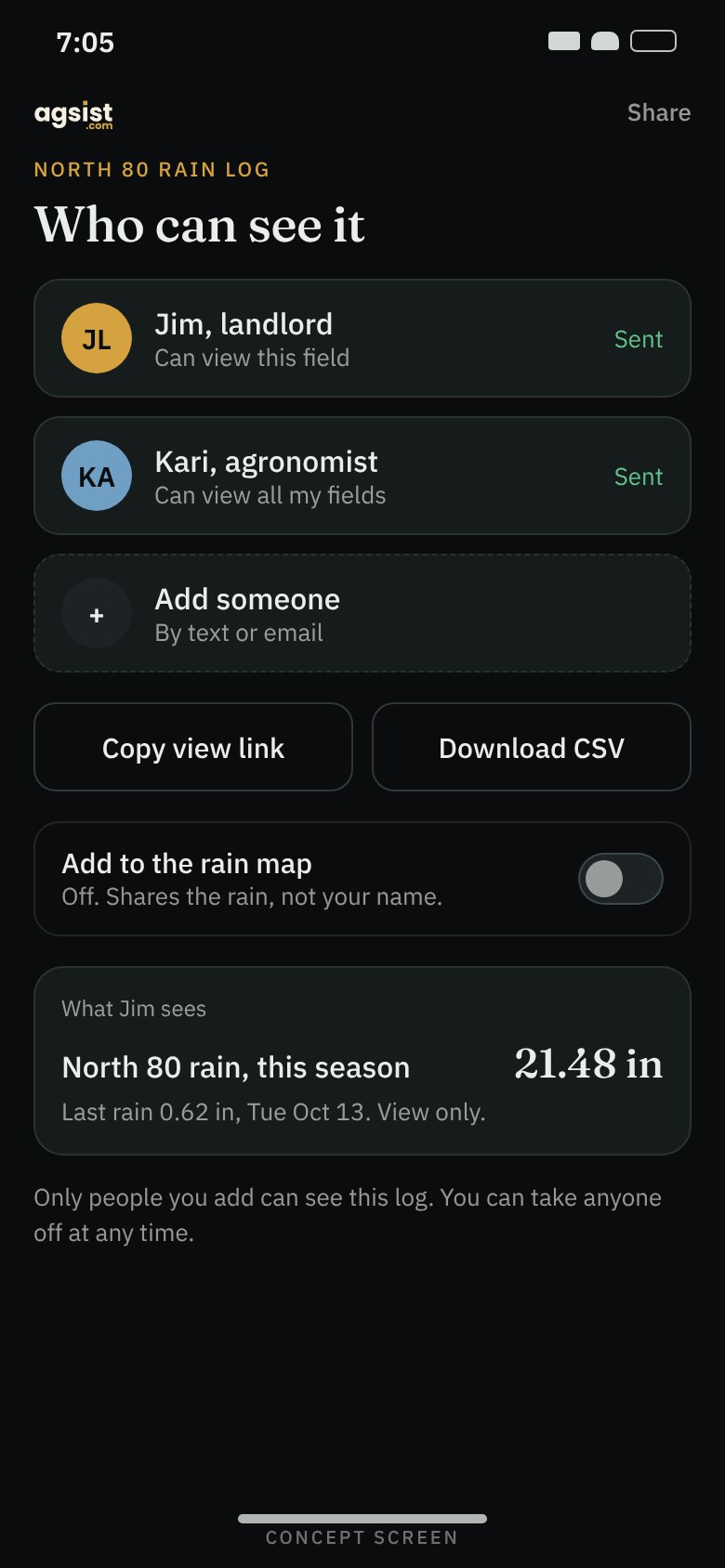
Concept screen: share a field’s rain with your landlord or agronomist. Share it if you want
Send a view-only link to the landlord or the agronomist. They see only the fields you share with them.


The phone screens are concept screens. The numbers are made up.
Why I’m building it
- No notebook. The reading goes from the gauge to the log in the same minute you read it.
- No forgetting. You don’t have to remember what it said by the time you get back to the house.
- A record for every field. One gauge per field means North 80 and the home place each get their own season total, not one number for the whole farm.
- It’s still a plain gauge. No battery, no phone needed. If you never scan it, you read it with your eyes and empty it, like you always have.
Who it’s for
- Farmers who want rain by field, not one number from a station miles away.
- Landlords and tenants who settle up on what actually fell.
- Agronomists and crop consultants who keep notes on a lot of fields.
- Anyone who reads a gauge every morning and is tired of writing it down.
The first batch, and what I promise
Priced as a thank-you
The first batch will be priced barely over what it costs me to make them. That’s my thank-you to the people who try it with me early. I haven’t set the price yet. Everyone on the waitlist gets that price, even if the first batch runs out before your turn.
If it breaks, I fix it
As long as I’m alive and the business is running, if your gauge breaks in normal use, I’ll fix it or replace it. Send me a photo and tell me what happened. Write to me at sig@farmers1st.com.
Made in Chetek
Designed, made, sold and shipped from Chetek, Wisconsin. If you write to me about yours, I’m the one who writes back.
I’m a crop adviser in Chetek, Wisconsin, and I run AGSIST. I’d rather build this with a few people who will use it and tell me straight what’s wrong with it.
A season next to a standard gauge
I’m not making any claim about accuracy yet. The prototype hasn’t been tested in real rain. It’s going to sit next to a standard gauge for a full season, and I’ll post what I find here, good or bad.
The first batch will likely go out before that season is done. If you get one early, you’re trying it with me, and you’ll see the side-by-side numbers as they come in.
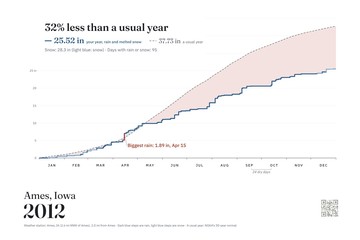
Rain Print: a year of rain on your farm, framed
Rain Print is ready now. Pick your town and a year, and I draw every rain from the nearest weather station as a print for the wall, framed or not, with shipping included. Make yours. Once the gauge is out, your own gauge’s season can be drawn the same way.
Questions
When can I get one?
I’m getting manufacturing going this winter, and I’m aiming to have the first ones ready before planting 2027. That’s my plan, not a promise of a ship date. People on the waitlist hear first.
What will it cost?
I haven’t set a price yet. The first batch will be priced barely over what it costs me to make them, as a thank-you to the people who try it with me early. Everyone on the waitlist gets that first-batch price, even if the first batch runs out before your turn.
Does it need a battery?
No. There is nothing in the gauge to charge or replace. The code on the collar is printed, and your phone does the rest.
Does it work without a phone?
Yes. It’s a rain gauge first. You can read it by eye and empty it like any other gauge. The phone part is only there if you want the log.
How do I empty it?
Lift the clear tube straight up out of its holder, dump it, and set it back in.
What does it mount on?
A wood post or a steel T-post. It screws onto a wood post. On a T-post, two hose clamps hold it.
Do I need to install an app?
No. Scanning the code opens a page in your phone’s web browser. There’s nothing to download.
How accurate is it?
I’m not making any claim yet. The prototype hasn’t been tested in real rain. Before I say anything about accuracy, it will sit next to a standard gauge for a season, and I’ll post what I find, good or bad.
Who can see my readings?
Only you, unless you share them. You choose who gets a view-only link, and you can take anyone off at any time. If a rain map is ever added, being on it would be your choice, and it would be off to start.
What if it breaks?
As long as I’m alive and the business is running, if your gauge breaks in normal use, I’ll fix it or replace it. Send me a photo and tell me what happened. Write to me at sig@farmers1st.com.
Will it work with Rain Print?
That’s the idea. A season of readings from your own gauge could become a Rain Print of your own field, instead of the nearest weather station. Nothing is built for that yet.
What happens when I join the waitlist?
You’ll hear from me when the first batch is ready, with the first-batch price, before anyone else. Only rain gauge news goes to that address. It does not sign you up for AGSIST Daily.
Sigurd Lindquist, Certified Crop Adviser (CCA), Chetek, Wisconsin